• Skip to primary navigation
  • Skip to main content
  • Skip to footer

BobbyVoicu.com

  • Home
  • About Me
  • Blog / Archive

Search Results for: mavenhut

Be Investable

August 16, 2013 By Bobby Voicu

hockey-stick

People often asked how MavenHut, with three co-founders that nobody knew anything about in Ireland, managed to get a seed round so quick and so big (especially in terms of European investment levels). And I was having a hard time explaining it in short words, until I’ve found this: Be Investable.

The first thing you’ll notice about Graham’s essay is that it isn’t filled with tips or tricks for getting investor’s money. Rather, the best way to convince an investor to give you money is to actually be investable. Usually that starts with having a product with some amount of traction, but some people are investable even if they have no product. Usually those aren’t first-time founders though.

Basically, MavenHut was an easy sell (as far as looking for investment could be called easy). And that was because of one thing: we had traction. We had a product that was up and running, that was acquiring users, that told us (and the investors) things like demographics, buying intent, session length aso.

This means that before going to investors with “I have a great idea”, find a way to make it happen. Yes, I believe you can get investment with just an idea, but not the first time you try.

There are, obviously, other elements that help the investment process (the team, the industry, the type of investor targeted), but I think the most important thing you need to do is to Be Investable: make their decision as easy as possible.

P.S.: You would be surprised how many startup founders (or wanna be founders) don’t really grasp the concept of having something to show investors, other than “And I have this idea…”.
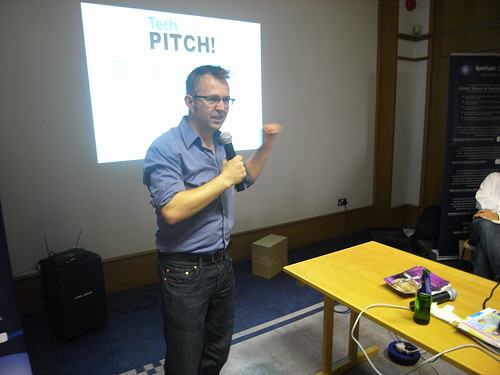
Photo from ShutterStock

You Don’t Pitch Just to Investors

August 15, 2013 By Bobby Voicu

TechCrunch Pitch

“If you create a great site, people will find you anyway, you don’t need promotion, SEO or anything similar!”. In my 5-6 years of doing online promotion, SEO, online PR and similar, I’ve heard something along these lines from a lot of people. And I thought it was completely wrong.

Last week I wrote a post about pitching (actually, it is about a book about pitching, but nevertheless). I mention that I think you should be, or better, you ARE always pitching. I’ve got some people telling me, though, that they don’t need to pitch if the product is great. And this, I think, is a mistake.

The are two situations I encountered related to this: the startup crowd understanding of “pitching” and the English as a second language understanding of “pitching”.

First, the startup crowd. Because of the buzz with VC backed businesses in the last 10 years or so, especially in the last 5, since lots of accelerators, incubators and whatnot where created, people think of pitching as just the pitches you do for investors (the pitches you do in order to get financed). The thing is, though, that in the last 2 years, I’ve hardly talked to more than 60 investors. But in the years before MavenHut, I think I’ve talked to more than 300-400 people, one on one, to get support, to get involvement, to get financing of other projects. Not to mention the events I’ve been speaking to, where I would be pitching my projects in front of bigger audiences.

Moreover, while I was managing the blogger’s forum in Romania (no longer active), I think I’ve talked, in 2-3 years, to about 1000, if not more, people, to convince them to use the forum.

The conclusion is that yes, you are always pitching. Just not to investors. You are always pitching to the stakeholders in your project. And no matter how brilliant your idea, your implementation, if nobody hears about your work, nobody will use what you are creating.

The second misunderstanding of “pitching” comes from people using English as a second language. Pitching means, to them, just investors. Or, in case of Media Agencies, calls to pitching mean meeting the potential clients in a competition-like environment. It’s the same mistake as to the startup crowd, but for different reasons. Well, it’s true, when the two of them combine, though, and you get a startup crowd that’s using English as a second language… well, things get really confusing :))

So, start pitching today. Pitch to your family, your friends, your users. You will be better for it. And, yes, always be pitching!

P.S.: in the photo at the top, you can see Mike Butcher, from TechCrunch UK. And if you would want to be featured in TechCrunch, you would need to pitch him, in some way. He actually has a great presentation on how to pitch the press here.

Photo source

Ten Minutes Before Work, Every Day

August 12, 2013 By Bobby Voicu

MavenHut Stand-up Meeting

Or, as they call it, “Stand-up meeting” or “daily SCRUM”. Which, for a product manager and team leader shouldn’t be new at all. But if you were not either, it might come as something new and, I might say, interesting.

As a freelancer and, afterwards, owner of a business, I got pretty good at scheduling and prioritizing my own tasks. I needed to, since there is no one looking over your shoulder to force me work or do anything other than wandering around aimlessly on Facebook (or Digg, if you take into consideration the time frame: 2008-2009).

Still, since starting MavenHut, one of my co-founders, Cristi, “forced” the entire team into 10 minutes stand-up meetings every morning. And while it didn’t necessarily improve my own productivity (my own “to do” list is more detailed than the one I present at a stand-up meeting), it helped me understand better what my team is working on, what their issues are.

Because this is what SCRUM basically does (in my experience):
– it forces you to be really to the point in explaining what you are working on;
– it allows everyone in the team to understand what you are working on. It’s really helpful, because they can also pitch in with suggestions;
– it allows you to see what the others are working on and understand if their work impact you directly in that specific cycle.

So, if you don’t do it, try it. Read here the basics and try it with your team, your co-founders. Heck, even with your cat, if you have no one else available. It creates a great habit, that will surely help you, in time.

P.S.: do not, I repeat, do not ask the cat for her SCRUM report. You might get something like “sleep. human petting. eat. sleep. sand. eat. sleep. human petting. sleep. wake up human in the middle of the night”. And this will really get you down :))

My “Me” Moments

August 10, 2013 By Bobby Voicu

The Phoenix Process

Up until two years ago my job meant, among other things, participating in a lot of events, meeting lots of people, talking to lots of people and, generally, consuming lots of energy by entertaining people around me. Don’t get me wrong, I loved it, but the thing is, from time to time, I would get completely burnt out.

So I needed to accept, at some point, that you can’t do everything, all the time, at the highest energy level. That you would need, from time to time, to recharge.

This is how I came over the “me” time. “Me time” is defined as a specific period of time (it can be from an hour to several days) when I am being as selfish as I can be, when I don’t care what happens in the outside world. Business or personal (family, friends, whatever). Unless something REALLY, REALLY bad happens, I will not be available for anything besides what I REALLY want to do.

And what is that, you might ask? Well, mostly playing computer games, go to movies, go on short trips (I’m more interested in the driving, not the destination). I also read books I postponed reading – SF books, mostly (btw, did you read The City and the city? great, entertaining book). Or I just walk around, thinking of stuff.

Up until two years ago (before MavenHut), I would have those moments whenever I felt like it, now I try to “schedule” them every other weekend, at least. And the thing is, my productivity goes through the roof after these “me moments”. Moreover, the best ideas I’ve had (business or otherwise) come as a result of these reflection times.

So, what’s the conclusion to an otherwise incoherent Saturday blog post?

Take some “me time”. You’ll love it :)

Photo credit

Always be Pitching, right?

August 9, 2013 By Bobby Voicu

MavenHut meeting Holland's King

In the recent years I’ve found myself pitching a lot of times: many different projects to a lot of different people. Some pitches worked, most of them didn’t (which is not bad, it’s just the way it is, not everyone is interested in your project at the specific moment).

Some time ago, a good friend suggested I read Pitch Anything: An Innovative Method for Presenting, Persuading, and Winning the Deal, by Oren Klaff. Thanks to a short, but long overdue and needed vacation, I started to read it. Some of the quotes I found interesting in the first 50 pages are below. They explain some of those moments when I felt I lost the control of discussion while I was pitching. Basically, my frame lost the collision :)

“A frame is the instrument you use to package your power, authority, strength, information and status.”

“When you are responding ineffectively to things the other person is saying and doing, that person owns the frame, and you are being frame controlled.”

“Every social interaction is a collision of frames, and the stronger frame always wins. Frame collisions are primal.”

If you have a chance to read the book, do it (You can find it on Amazon here, for Kindle or hardcover). After all, you’re always pitching, right? :)

Also, below there’s a video of the author talking about his method (it’s an hour and 30 minutes video, just so you know):

Lifestyle Business: A Real Option

August 8, 2013 By Bobby Voicu

Several years ago I was talking to a friend and he said that he is more interested in a lifestyle business than in “high risk, high reward” type of business. I was interested in the second one (which is, usually, about the VC backed startups – like MavenHut), while he was interested in the first type, which means growing slow, bootstrapping and taking a longer time to see either success or failure.

Most of the time, you don’t really hear too much about the lifestyle business. The most obvious that I know of is Evernote (which is more of a hybrid), but today I’ve found an interesting article on Hacker News about a lifestyle business that generates revenues of about $15 million per year from Malaysia.

I like the article, I think it underlines the most important thing about a lifestyle business: being really passionate and enjoying what you are building. Otherwise, how will you be there for the next 10-15 years?

This is important to me. I’m a lifestyle entrepreneur. Mindvalley was built around my passions – meditation, personal growth, play, culture, travel and epic interior design (our offices are magical). Having total ownership means I’m not pressured by partners, boards or investors to deliver something that I’m not passionate about.

Link to 7 Lessons from Building a Lifestyle Business

If you could choose, would you choose a lifestyle business that generates steady income, grows slow and takes a longer time to reach the valuation you want (but it might be less risky), or the VC backed business?

About Me

Bobby Voicu

Email: me AT this domain name

I’m Bobby Voicu (pronounced Voikoo – video on how to pronounce it here) and right now I’m the CEO and co-founder of MixRift. We raised some money and we make Mixed Reality games. And we publish XR Gamer Digest.

Before this, I’ve been the co-founder and CEO of MavenHut (read more about the company here). Previously I’ve been an angel investor, mentor for startups (and accelerators like RebelBio and MVP Academy).


Why “Bobby”?

My full name is, actually, Bogdan-Andrei, but thanks to my younger sister, who couldn’t say “Bogdan” when she was really young, I became Bobby to everyone around me. And the name caught on, especially because “Dallas” was on TV in Romania at the time and everybody knew about Bobby Ewing :)

Facebook |Linkedin |Twitter | Instagram

tl;dr version:

I started my first business at 16, selling PCs. I then had some offline businesses.

I started to work online in 2005, I’ve been the Romanian representative for Yahoo! in 2008, I started a consulting business in online communication in 2006, I’ve been involved in building the blogging community in Romania, sold some blogs, co-founded a startup (MavenHut) in gaming and successfully sold it, part of the 2012 cohort at Startup Bootcamp Dublin.

Timeline version:

– 2024 – Started MixRift. After raising a $1.6 million round.

– 2017 – published The CEO Library

– 2016 – I started to invest in several funds: SOSV III, MVP Fund, as well as on my own in some companies (Freebusy, among them). I quit as CEO of MavenHut and I stopped operational involvement in MavenHut.

– 2015 – sold a big part of the games MavenHut produced to RockYou, an US company.

– 2012 – co-founder and CEO of Mavenhut, a gaming company, as part of Startup Bootcamp Dublin.

– 2008 – 2012 – sold several websites and business built in the previous period of time (among them autounleashed.com/rpmgo.com and monden.info – now urban.ro)

– 2009 – started my own online communication consulting business (closed in 2013 to solely focus on MavenHut).

– 2008 – started to work for Yahoo! as the representative in Romania (1 year, until 2009)

– 2006 – started a 2 hours radio show in Romania (radiolynx.ro) about internet. The show lasted for 6 years. It was early podcasting, I now realize.

– 2005 – started to work as freelance on getafreelancer.com (now freelancer.com)

Unseen Perks of Being in a Startup: A King, A Flight CEO and a Comedian

May 1, 2013 By Bobby Voicu

Everytime we talk about the reason we want to be in a startup we talk about freedom, about doing the things we want to do and so on. But lately I found out that there is another reason I like being in a startup: I get to meet people I normally wouldn’t meet, people I enjoy a lot talking to.

Just let me give you two examples (and a bonus):

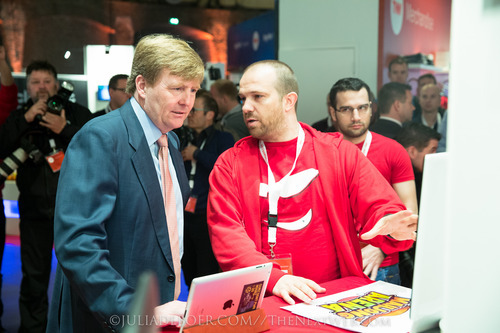
1. Last week MavenHut, the startup I am a co-founder of, launched Mahjong Arena, our second game. For this, we went to The Next Web at the end of April, took a booth and launched there. And we had one surprise guest: the future (then) King of the Kingdom of The Netherlands (yeah, the king of Holland). We shook hands, we talked about the kind of games we’re building and he surprised us with some really well put questions.

image

It is the first time I am meeting royalty and chances are, if I wasn’t in a startup, I would’ve had no chance of meeting a Dutch King (especially coming from Romania). It didn’t change my life, but certainly made it fun to talk to my parents about it :D

Oh, and I asked him to help us make Solitaire Arena an Olympic sport. It can’t be done apparently, since this it is a mind game, not a physical one. Well, at least I got irefutable proof that Solitaire Arena is a mind game, in case anybody thought different.

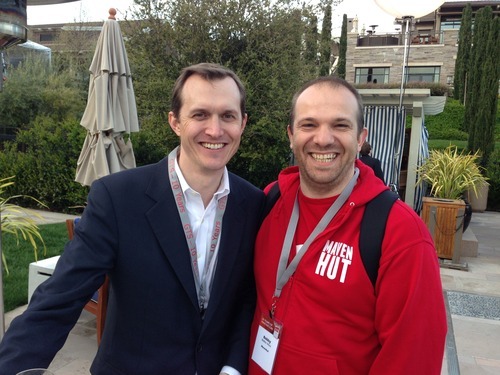
2. About a month ago, I visited Bay Area for business. And, at one of the events, a friend told me: look, that is the CEO of Virgin Galactic. He was talking about George Whitesides and not Richard Branson, who is the founder. And, like a groupie that I am (I just read the article on Wired about them), I went to him to congratulate them for what they are doing, reinventing the flight on this planet. And, of course, he was great, he actually talked to me for several minutes and seemed to enjoy the talk.

image

And, since he was such a great guy, I did the unthinkable: I told him that, in a way, we’re doing to Solitaire what they are doing to flight: bringing it to the new century. I can’t really tell you how baffled he looked when I told him this: after all, I seemed a perfectly normal, even if a little too enthusiastic, person, not the lunatic I proved to be by telling him the following statement:

“MavenHut is reinventing Solitaire, a hundred year old or more game, with Solitaire Arena, while you are reinventing flight, that’s been done the same way in the last 100 years”, I said. He laughed, kinda approved, smiled, and changed the subject.

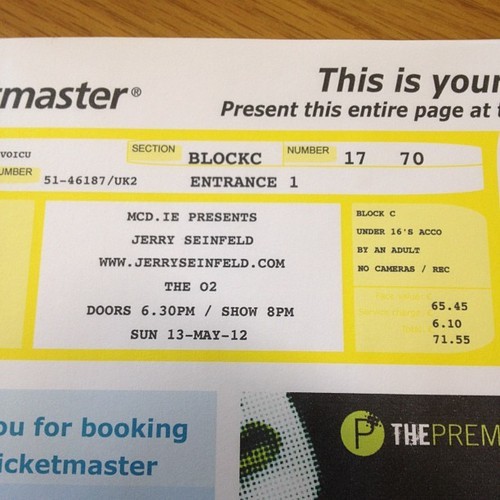
3. Finally, I am a big fan of Seinfeld (the TV series, in particular). And, since Jerry decided several years ago that he wouldn’t  to tours anymore, I missed that boat (seeing him on stage). Until I went to Dublin last year, for Startup Bootcamp. And, in the last weekend there, I got to see Jerry Seinfeld on stage. I didn’t talk to him or anything, but it is a nice thing to be able to see the legend on stage.

image

Obviously, each of us has different “bonuses” or “perks” that we get from our own startup experience. You just need to look around you and remember that you are the sum of your experiences and hobbies, not just the business you are building :)

My comfort zone is being out of my comfort zone

March 3, 2013 By Bobby Voicu

image

I’m sure you know someone that is “doing it for the rush of it”. Where “it” can be anything from speeding to bunjee jumping and sky-diving.

Well, it hit me recently, while talking to my wonderful girlfriend (I just realized how patient and understanding she usually is): I get my “adrenaline rush” by pushing myself constantly outside of my comfort zone.

Starting with speaking in public, years and years ago, to smaller things, like telling people at Mavenhut that I have no idea what they are talking about and asking for explanations. And if you think admitting that you have no idea what someone is saying and asking for details is not “getting put of the comfort zone”, then you’re not asking too many things in your life. And this is a big mistake.

“My comfort zone is being out of my comfort zone”

Now, joking aside, I really feel good pushing myself to my limits. That’s when I feel that I grow and learn.

Obviously, I do not push all my limits. I admit, I can’t seem to be able to quit on Diet Coke no matter what I do. Or is it just me testing my limit there? :)

So, how are you getting out of your comfort zone today? :)

P.S.: I wrote this post on an iPad Mini using just the virtual keyboard. Talking about comfort zones…

Photo credit

  • « Go to Previous Page
  • Page 1
  • Interim pages omitted …
  • Page 7
  • Page 8
  • Page 9

Footer

About

I write about things that raise my curiosity. And I’m quite curious about all kinds of things.

For a full “About Me”, go here.

Posts

  • We just raised $1.6M for Mixed Reality games

Projects

  • MixRift
  • XR Gamer Digest
  • Sami the Westie

Copyright © 2026 · Privacy Policy · Disclaimer

We use cookies to enhance your experience. By clicking "Ok" or by continuing to use the site, you agree to this use of cookies and data.