• Skip to primary navigation
  • Skip to main content
  • Skip to footer

BobbyVoicu.com

  • Home
  • About Me
  • Blog / Archive

Search Results for: mavenhut

How to Validate a Software/App Idea with Less than $200: A Case Study of MavenHut’s Solitaire Arena

May 12, 2020 By Bobby Voicu

Do you really need a product to show when you start a new business?

The truth is you can actually start a business without a product. You need to know if there is a market for your idea, though. How do you do this? Asking friends and family is a dumb idea, in my opinion, so you need to find another option.

Read below how we’ve done it at MavenHut, before writing even one line of code. This happened in 2012, but the tactics and strategies mentioned in the post below are still valid.

A lot of people talk about Dropbox’s launch: they had a video, put it on youtube, got 75,000 people signed-up on the waiting list and so on. Of course, by that time Dropbox was a Y Combinator company, a year old company, for that matter, so this might have helped a little bit (more).

How to Validate a Software/App Idea with Less than $200

Use a mock product site

Here’s how we did it at MavenHut: In February 2012 we’d just gotten accepted into Startup Bootcamp Dublin on the perceived strength of the team, mostly, and not because we had some amazing product (read about MavenHut’s 1st year here). We’ve have had some idea of what we wanted to do, but it was fuzzy, to say the least. So, the first thing to do: we needed to confirm that taking classic games and making them multiplayer was a good thing. Take into consideration that most classic games are single player (Solitaire, Tetris, Minesweeper, Asteroids, Space Invaders aso), so the question we asked ourselves was genuine and needed a real answer.

After some analysis, we decided on Solitaire to be the test game. But we wanted to know if people would actually want to play such a game. And I considered that we needed to have the potential users take some sort of action, not only tell us “Yes, I would play this kind of Solitaire!”. As Ford would put it: “If I had asked people what they wanted, they would have said faster horses.” (though the quote is not sure to be real).

I would rather have some action from potential users, rather than have them tell me what they think they want.

What we did, in short:

I bought a domain name (solitairewithyourfriends.com – not live anymore, but you can see some it on archive.org, here).

I installed WordPress on the domain, using some cheap hosting. I am graphically challenged so I just chose the simplest theme possible and I wrote one post. The text on it was, basically, telling people that we work on a great version of Solitaire, but it’s not available yet, though you can play the old version. Also, we had a Photoshopped screenshot of how it would look (which I didn’t do).

The most important thing in the entire page was the fact that we had a link to an “old version” of the same game. And you “could” play that if you really wanted a multiplayer solitaire. The thing is that game never existed. We lied a little bit, but this way we had people perform an action and that told us that they were interested (or, at least, curious).

On the second page, though, people couldn’t play the early version of the game, since we were “just doing some maintenance on it”, but we asked them to complete some form, to give us some information. We thought nobody would do it, but we were pleasantly surprised (numbers below). In the form, in just 4 questions, we asked some info on multiplayer and classic games.

Finally, after building the site, I’ve deployed some Facebook ads and 3 days and $160 later, we had some answers.

So, this is, in short, the story.

Now, some numbers.

1. You don’t need an expensive site

Building the site, from the moment I bought the domain name to the moment it was live, took me about 4 hours (I am in no way proficient with WordPress or graphics). It cost me $12 in the domain name from NameCheap (today, I recommend Hover.com), and I already had some hosting on BlueHost, but I assume you can use any host. I would suggest, though, one that has any type of quick WordPress installer, since it makes it really simple to install WordPress. You can find hosting packages for about $3/month for monthly payments (and, for a test, you don’t need more than that). As an idea, for The CEO Library I use WPX Hosting, which is the best managed WordPress hosting I’ve used, but it’s a lot more expensive (because of the support it offers, the options and so on). The thing is, for a fast test, you can really use almost any cheap hosting you have access to, like Bluehost.

WordPress is the blogging CMS that’s really easy to install, has lots of features, lots of themes to pick from aso. I used ThemeForest to buy premium themes, so I would suggest them. Still, even better, I would choose a free theme, and you can find plenty on the web, starting with the WordPress themes repository.

2. Make the content on the site interesting and engaging for you target audience

Since we targeted people that played games, I used a more tongue in cheek tone, having fun at our own expense, lowering the initial rejection reaction that people would have for being tricked into getting on a page that promised them an interesting game. Also, a screenshot of what you offer (or promise to offer) them goes a long way, showing that you are actually trying to provide what you said (see the screenshot above with our frontpage). You can make good looking images with Canva, it’s an amazing and fast tool (even I can create them).

On the second page we continued with the same attitude, but this time we had to push the “saying sorry” theme since it was a second time we actually tricked the players. So we used the “can’t resist” eyes of Puss in Boots from Shrek and asked to be forgiven. This allowed us to be more cheeky, actually, and also ask for their help with the form: “Pleeeaseeee?”.

3. Users should take some kind of action

The Click here on the first page was the action we were very interested in. And everything on the page drives people to click that. We thought that if they do click (they do some action), they are really interested or curious about what we want to offer (a multiplayer Solitaire). On the same page, you could also click on the Photoshopped image of how the game would look like.

Moreover, on the second page, since we knew we would lose those users anyway (nothing else to do on the site), we added a Google Form (free with Google Docs, puts results in a sheet, best choice in my opinion for something fast and short). In the form we chose to give them just 4 questions – initially 5, because I wanted the “submit form” button to be visible without scroll. The question can be anything you need, we needed some game ideas suggestions from the potential players.

To give you the context, the first iteration of MavenHut was a platform for real money betting on single player games (hence, the third question, about betting).

Finally, a lot of people asked why we didn’t ask for the email addresses. Well, we wanted as many answers as possible in the shortest amount of time and I’ve found out that people become more evasive once they give any type of identification, even email. Moreover, since it was a small test, the list would be really short. Building an email list is a good thing to do, but not in this particular case.

Actually, why don’t you subscribe The CEO Library’s email list. I’m sending a weekly email with tactics for startup growth, books to read, as well as a list of interesting startup and business articles from around the web.

4. Drive some targeted traffic to the page

This is what a lot of people find difficult.

First of all, you need to decide how much is enough: how many visitors, how many clicks, how many answers. We decided that about 200 visitors should be enough to give us an idea of the appeal of Solitaire multiplayer. More, we were really bootstrapped at that point so we wanted to spend the least amount of money possible.

There are two ways to send traffic: free and paid.

Free traffic means going to sites like HackerNews and use AskHN (I think reddit also has a similar section) if your audience is there, go to forums where your audience stays or, if you can, find a blogger to ask his/her audience. The downside of the free traffic is that it takes time to generate it.

Paid traffic means everything from Google Adwords to Facebook Ads. We chose Facebook Ads because we already knew we would launch the first game on Facebook (my co-founders had a lot of experience on the platform), so Facebook Ads was the choice. Moreover, you could target specific audiences, from location and age to, what mattered most for us, interests.

We’ve got some interesting results:

As audience, we chose Solitaire as interest and US as country.

Finally, we sent these users to our site, but we needed to follow them in the site and extract some info.

5. Metrics: the most important thing

First and foremost, you need to understand what indicators you want to follow. From the start, our KPIs were:

– how many people reach the site from Facebook Ads (is there any interest in this type of games?)
– how many people click on the first link on the site (Click Here and the image) – this would give us information on the level of interest for this kind of game
– how many people complete the form (self-explaining)
– how much time people spent on the site, especially on the second page (it means they were interested enough to read what we wrote)

All these numbers were available through Google Analytics, the free solution from Google, which we happily installed.

The results? Well, above expectations:
228 unique visitors, 517 page views, 386 unique page views, 145 pageviews on the second page (the one with the form), 2:09 minutes on the second page.

The percentage of people visiting the second page is 60% (145 unique pageviews compared to 240). This means 60% of the unique visitors (approximately, since we cannot compare unique visitors on the pages, but we expect people didn’t visit the second-page multiple times) clicked on “Click Here”. So 136 people visited our second page. Out of those, 66 people submitted the form to us. A staggering, for me, 48% of the people that got on the second page (and 29% of the total visitors).

The answers? Well, those are for us to have, aren’t they? :) There are two of them in the screenshot below (the same as the one above).

The results of this experiment gave us the push to start building Solitaire Arena. And it gave us first proof of concept.

I am amazed at how many startup founders don’t do this kind of testing (especially seeing how cheap it can be – it cost us less than $200), but I think most of them don’t do it just because they are afraid of the answers. We were quite ready to change course (which we did, we never built a gambling platform, as we initially intended).

Finally, where does the story end?

Well, we presented some great numbers at the Demo Day of the accelerator: see our Demo Day presentation here.

Solitaire Arena had, a year after launch, 1,500,000 monthly active users, MavenHut has been the recipient of $700,000 in investment and it has outgrown the 3 initial co-founders several times.

In 2015 we sold most of the games to RockYou, an US company. MavenHut’s games were downloaded more than 40,000,000 times across all platforms available. And in 2016 I left the company :)

P.S.: I wrote the first version of the article in 2016. This is an updated version I wrote in 2020.

I almost quit MavenHut 6 months after starting it

April 19, 2017 By Bobby Voicu

One time. It was that moment when I woke up and said: I can’t take it anymore. It was just 6 months into MavenHut, at the end of August 2012, but I felt that all I was doing was for nothing, I wasn’t moving forward at all.

Cristi and Elvis, my co-founders, were creating a great product, that was interesting for our users. We were at about 100,000 installs in July-August 2012. I still said to myself: I can’t do this anymore.

I was the one raising money for MavenHut. I was the one meeting investors and talking to them, getting all the criticism from them, trying to convince them that a trio of guys from Romania can build a global business in gaming using a Solitaire game. And investors would say things like “oh, interesting, let’s talk next month, to see if you are still growing”. Or “I would invest $50-100k now, but only if you find someone else to invest the rest”. We were, at that point, looking for about $500,000 in investment, so it wasn’t that easy to come out with “the rest”.

Nobody told me that raising money took this long. When you were reading the startup literature you were under the impression that it takes several days, the most, to raise money.

Cold Truth

Well, that day of August 2012, I was finally accepting the hard truth. It might be even longer than the 6 months I had already under my belt. Even though we had good signs from investors, even if we could take €50,000 as investment from Enterprise Ireland because we won a pitching contest with them. Gaming is a cash hungry business. €50,000 would not be enough to hire 2-3 good people and also promote the games. We would be running out of money almost as soon as that money hit our accounts. And this time we would have to pay the salaries of the people that trusted us enough to come and work with us, not only the food for the 3 co-founders.

Add to this the fact that I started 2012 with several tens of thousands of dollars in my accounts and now, when I looked up the balance, all I could see were $300. I had put almost all my money in MavenHut.

Moreover, I no longer had any personal revenue to speak of.  Previous clients from my old consulting business asked me constantly when I was coming back and “make real money”, not “startup money”. I’ve already promised my co-founders that I would only focus on MavenHut, so it was no contest. We all quit on previous opportunities, it wasn’t like I was some kind of hero.

That’s when I stumbled. For a second, there, I didn’t believe that I could do it. I didn’t think I could make it for 4 more months until the end of 2012. That’s when we would shut down the business, provided we didn’t raise enough money.

That was the only time I ever felt that I would quit MavenHut.

How come that I didn’t quit, then?

First of all, I wasn’t alone in this. At one point or the other, my co-founders felt that it wouldn’t work, as well. But we found that talking to each other helped. So I had a long talk with Cristi that day.

Cristi suggested I should take one of the consulting contracts my previous clients wanted me to take and see if I really wanted to go back there, while also making some personal money. He also kept reminding me that SOSv, the investment fund, was really interested in us. And the only reason it was taking so long was that we were trying to close the deal during the holidays. Lawyers and investors need to take vacations as well. So we had a business deal in place, but no contracts to show yet.

Actually, this is what pushed me over to almost quitting, if I think about it.

The context: we already had the deal in place with SOSv. They would invest 50K now and, based on MavenHut hitting specific KPIs, they would follow with another €500,000 investment. But signing the documents kept getting postponed by different things I perceived to be “small” and “not that important”. The last block on the road was that the lawyers (ours or theirs, I don’t remember exactly) just let us know that they would be on vacation for a week. Or something like that.

Keep in mind that SOSv was one of the 50-60 potential investors I’ve talked to in the previous 6 months. People that kept telling me things like:

– “Solitaire is free on all computers, nobody will give you money for it”
– “what if Zynga decides to do a similar game?”
– “right now there is another team starting in Dublin and the 6 guys in it were part of big companies like Tilt Poker, Ubisoft, EA” (random names, I can’t remember the exact companies, but they were big)
– “you only have one developer in 3 co-founders, that’s not good”
– “gaming is too risky”
– “I have gaming companies in my portfolio and I don’t want to invest in another ever”
– “I will put $50k, $100k, only if somebody else puts the difference”
– “let’s talk in a month when you should have more users”
– “I don’t invest in companies pre-revenues” (it was a lie)
– “I am not interested in revenues so early, but you should have another product besides Solitaire”

All of these reasons are not something new for anybody that raises money. It’s the same, with a different flavor. And it’s killing you slowly.

What did I do?

Finally, what happened is that I took a consulting contract. Which should’ve been over and done in 2 weeks. And it took 3 months. By the time I got the money from that contract in my account, we already signed the deal with SOSv and already got the follow-on €500,000 investment, as well, because we moved really fast to the KPIs set up for the €50,000 deal. By the end of 2012, when we would’ve killed the company if we didn’t raise money, we were 8 people at MavenHut and the company was growing fast. And in January 2013, the first month we made any real money, we made enough to pay all the salaries from revenues. By August 2013, one year after the fateful day, MavenHut was generating about 30 times the revenues from January 2013.

I sometimes wonder what would’ve happened if I was alone in MavenHut. If I had no people to confide in that would understand me: Cristi and Elvis. I don’t think I would’ve quit, to be frank, but it was a lot easier to be able to talk to someone about your frustrations.

It’s interesting that, 4 years later, I rarely remember those bad, bad moments.  If you ask me about the early years of MavenHut, just 4-5 years ago, most of the things I would tell you are good things. Elvis coding like a ninja, Cristi understanding the product, me raising the investment “almost” overnight.

But then, I meet with an early stage entrepreneur, like I did recently. And she was beyond frustration with the responses she was getting from investors she was meeting. And I remembered how frustrated I was during 2012 when I was raising money. All of a sudden, the memories came back and it wasn’t “me raising the investment almost overnight”. It was me almost leaving MavenHut.

When you read on the internet about startups, you mostly read about the AirBNBs and the Dropboxes that raised money easily. Even though, I’m sure, it didn’t happen like this for them, as well. But, hey, it’s all fun and games until it isn’t.

So, what next?

What should you do if you think about quitting?

First and foremost, think about what you’re feeling? Is it just the frustration talking or you really don’t trust your business to make it anymore?

If it’s the second case, you should quit. You will be the worst resource for your startup ever if you don’t trust what your company is doing.

If it’s just the frustration talking, then you can go to the next step: removing the frustration or learning to live with it.

Identify what frustrates you

For me, the frustrating thing was the speed (or lack of) with which things were happening. When I looked at it carefully, I understood I was expecting something else. Years of reading about startups made me believe that things happen a lot faster. It wasn’t true for us, though. And, after talking to a lot of entrepreneurs, it’s not true for everybody but a few, few exceptions.

I was also frustrated by not having money anymore. Personal money. Since I spent most of my savings on company related stuff (buying ads, paying for trips to Ireland/Romania and back, really small salaries for us to pay for rent and food), I felt uncomfortable with not having any stream of income.

You can be frustrated by lots of things. By not having users. By not having the best product you can build. By not hitting your targets. By having bad KPIs. By your relationship with your founders. With your employees. With your investors. All of these reasons are valid reasons to feel frustrated, but you need to identify them and face them.

Face the frustration

Waking up wanting to quit doesn’t just happen over night. You probably had issues with something for the last months or so. But you just kept saying it’s just a phase, it’s a thing everybody goes through. And you’re right. Everybody goes through this kind of moments, but not everybody does something about it.

So, how do you face it? Well, the easiest way is to talk to someone as involved as you are in the company. One of your co-founders would be good. If not, talk to your mentor (you do have a mentor, right?). Your investors, if you have them already, could be good discussion partners. Or maybe you have some company advisers. Tell them what you feel. Ask advice. Most of the times, they have more experience than you and they might know what you are going through or put you in contact with someone that does.

You’ll find out that most of the times, just talking about the things that frustrate you will solve the issue. You just need to relieve some pressure. Or you will find the solution on your own, once you speak out loud.

Obviously, be careful who you talk to. Not all investors are ok with you saying you want to quit and not all co-founders will keep trusting you. Just don’t be stupid about who you trust. And, if you were, well, it’s just another thing you need to sort. And you just learned you can’t trust that person for advice or help.

Solve the frustration

Once you identified and faced the frustration, you need to solve it.

More often than not, you just solve your frustration by understanding that some things take time. And you need to learn to wait it out. Like the holiday of the lawyers I told you about earlier. Not even a month later we already signed the initial investment and we had €50,000 in our accounts.

Of course, you can still work during that time. One thing I remember doing then was to jump on the plane and go to Cork, where SOSv offices were, and talk to their CFO. I wanted to be sure that he had all the elements he needed to correctly estimate the potential of our company. I had a three-hours meeting and I learned a lot in that meeting. And Steve, the CFO, confirmed to me that it became a lot easier to understand our business model once he talked to me.

On the other hand, if it’s something that is not time-related, you need to solve the issue. But now you know what’s it about. So you can find someone to do it if you are not good at that. You can read about it. You can take courses. Whatever. As long as you know what the issue really is, you can do something about it.

In the initial stages of the investment process, I needed to do some sort of revenues/cost estimates. And while I could’ve probably done it, it was easier to talk to someone to help me. And this is how our first CFO got into the picture.

What if the KPIs of the company don’t look good?

Well, this is not a good reason to quit. You just make the numbers better.

If you don’t trust that you can make the KPIs better, then you talk to your co-founders/investors and you quit. Or take a different position in the company.

Finally, if you still want to quit, talk to the stakeholders in the company and leave. It might be the best solution for everybody. Just don’t leave tomorrow. Give people time to adjust to your leaving, make the transition and then go. And, probably, in 2-3 years, you will forget the bad things and you will want to start a new company. And the cycle goes like that again.

And, to answer my own question in the title: What if I quit then? Well, I would’ve probably missed a great adventure. I’m just glad I didn’t :)

Article illustration specifically created for me by Miruna

P.S.: Don’t forget to subscribe to my newsletter. I send a weekly email with the best things I find to read online (mostly business, but not only).

[Job] iOS Developer at MavenHut

December 18, 2013 By Bobby Voicu

[JOB] iOS developer at MavenHut

MavenHut is growing. Faster than we expected, actually. As a consequence, we are bringing more people on board (adding to the 16 we already are in the office). And one or more of them should be an iOS developer :)

So, if you are an iOS developer and you want to program fun games, played by millions of users around the world, you want to experience a Silicon Valley like startup life, but closer to home (our dev HQ is in Bucharest), you should give us a nudge (mail to beatrice.galatanu A T mavenhut.com).

fotografii-mavenhut-lr-49Actually, to see more of MavenHut’s offices and attitude, you could read this article in Adevarul or see this video from Antena3 (starting with 11:30 mark or so). We are a fun team to work with :D

Here are some details on what we are looking for:

– iOS development – minimum 2 years
– Objective – C and iOS API
– Socket programming on iOS
– experience in migrating web apps to mobile apps
– experience in delivering complex apps to market which interact with an online API
– Familiarity with XML/ REST Services
– Portfolio required, personal or teamwork
– Game Center integration experience is a plus (though it’s actually not that difficult anyway, even I could do it… in a much longer time :D )

If you are interested, fire an email to beatrice.galatanu A T mavenhut.com.

Photos by Dragos Asaftei

MavenHut in the Romanian Press

June 14, 2013 By Bobby Voicu

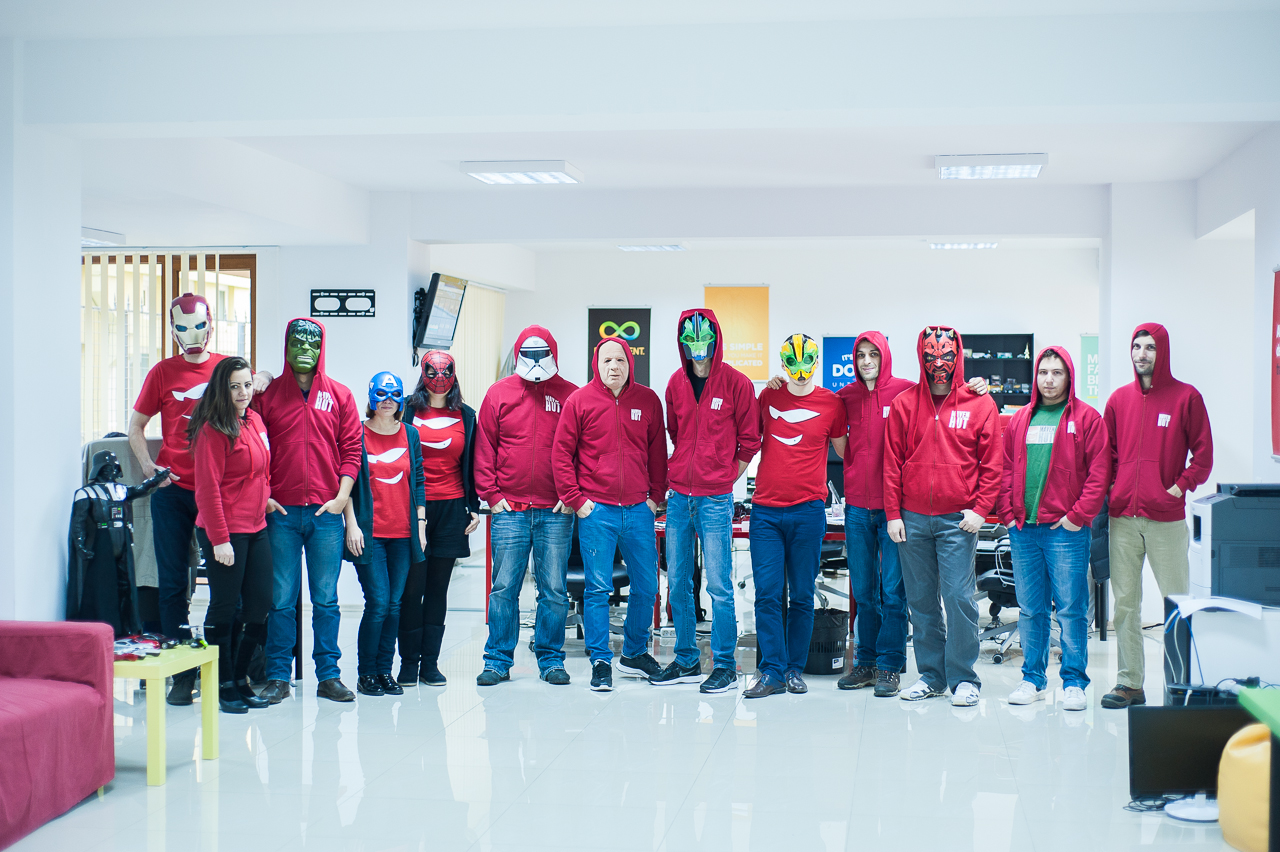
We’ve been the subject of two articles in the business press in Romania in the last 2 weeks (Biz and Business Magazin). Below are the photos that illustrated both articles (the press links are here, unfortunately Romanian only).

I am part of a really great team :D

BIZ 6 iunie

business-magazin-mavenhut-team

Story of MavenHut

Here’s my story of 2012, the year that started with me and two friends at Startupbootcamp, and ended with us getting 550,000 Euros in funding. So much happened this year, that it almost feels like three years rolled into one. Here’s what I learned about startups this year.

Lesson 1 : Join an accelerator – seriously

We spent the first 4 months of 2012 at Startupbootcamp Dublin, as one of the 10 teams accepted there.

We were 3 cofounders (Bobby, Elvis and Cristi) working day and night on one single project. I don’t think we ever got to the same level of effort and efficiency afterwards. We were eating, drinking and breathing Mavenhut and Solitaire Arena, without being plagued by any distractions. (Except maybe one major distraction: one founder’s girlfriend “fell through the cracks”, because she couldn’t cope with being alone for so long back home.)

If there’s one reason I insist that the founders teams should sign up for accelerators, this is it: for 3 months of your life, you won’t be doing anything else. You’ll dream about your project at night. And 3 months of living together will conclusively show if you’re able to get along with your partners for a long period of time. Trust me on this!

Lesson 2 : “Pivot” is overused, but “Lean Startup” is extraordinary

Along the way we learned that pivot is an overused word, but that Lean Startup is an extraordinary concept. We had an idea for a multiplayer solitaire game. We tested the idea by placing a form on a website and sending 200 people to it through Facebook ads. Guess what? Multiplayer solitaire isn’t a bad idea – on the contrary!

Lesson 3 : You can’t iterate too fast or too often

Elvis (cofounder and main developer) made 400 deploys in the first month of Solitaire Arena – about 15 on any given day. That’s how fast the learning and implementing cycle was. And yes, most times there was a bug solved per deploy, but that allowed us to immediately learn something new from our players. And we repeated this again and again and again.

Lesson 4 : Learn how to rock Demo Days – be MEMORABLE

Speaking at conferences for the last 6 years doesn’t help at all when you have to compress as much as possible in just 5-6 minutes, the time you have for a Demo Day event. Especially when you feel that investment in your company depends on that. It took me 3 weeks of continuos improving and repeating to reach a so-so version of the pitch. And that pitch was then messed up by the fact that the mic went out. Twice.

But during that same presentation I also found that entering the stage like a boxer in the ring, wearing a hoodie and some sort of gloves, with the team behind you, is a sure way for potential investors to remember you.

Add the disfunctional mic, a fantastic “recovery” that made everyone laugh, great numbers on the slides and there it was: each person in the room remembered us. You can see the video here:

I still remember the first day after Demo Day. Really tired and quite upset because we didn’t receive any investment proposals that night, even though we talked to lots of people. But that changed in the day after that. In the next week we got 8 offers! In the mid to high 5 figures for a seed round. Everything looked a lot better, all of a sudden.

Lesson 5 : don’t negotiate on an empty stomach

In May, we returned to Bucharest to regroup. 35 degrees Celsius outside, in an office with no AC whatsoever. Picture continuous discussions with the investors with whom we had already started talking to and other discussions with new investors. The offers were still in the seed money realm, which wouldn’t help us too much in the long run. We wanted more.

The summer became even hotter when reality his us: we had been living mostly out of our savings for the past 6 months. Savings have a particular characteristic: they don’t grow if you don’t generate any kind of income. An older website we sold at the right time bought us a little more time, but one of the lessons learned was that you don’t want to negotiate an investment (or anything, for that matter) while on an empty stomach.

Lesson 6 : it pays to keep your options open

Fortunately, we won the Competitive Startup Found, an Enterprise Ireland competition that offers € 50.000 to 15 Irish startups, each trimester. We didn’t take the money in the end. But it offered us an additional safety net, and it allowed us to keep negotiating with our potential investors, only this time feeling more at ease.

Lesson 7: investors love hard numbers and demographic data. Track them from the very start

Meanwhile Solitaire Arena was growing. Users played more and more, and we showed more traction every day. This meant that we finally could discuss numbers when we met with the people interested in investing. I don’t think there was anything more important to these discussions than the fact that we could say: “80% of our users are women over 25, who play, on average, 10 games a day”.

We later found that startups in our situation (early stage) often had no clue about this kind of data most of the time. But we had Cristi’s previous experience: he spent 5 years analyzing these kind of stats daily and understanding how important is to follow and measure everything, from the very start.

By the time summer ended I had started getting more and more into it, considering that I was in charge of the business development, the legal stuff and so on. The talks with investors were more specific and tangible, the lawyers started to play their part, the costs and incomes estimates started having more and more sense, numbers began to be substantial.

Lesson 8 : you CAN have too many users if you’re not prepared

So we entered the 3rd year and final year of 2012: fall. And with it, the first, small round, of an investment. It was a small amount at 50.000E, but so important in the big scheme of things. The question was: were we able to scale the business, once we had some money to spend? Well: yes.

Here’s when we learned that too many users in a too short period is NOT a good thing if you’re not prepared for it. Our server crashed 5 times in 3 days. But we pulled together and, in just 2 months, we delivered the KPIs we had established with SOS Ventures. Afew days later, at 1 am, I sent the magical sms to my cofounders: our lawyer had just announced that all the signatures were on the contract and that the money would be transferred the next day.

Two days later we announced the investment on stage at How To Web. Good times!

Lesson 9 : raising money requires you to spend effort and to trust

The main lesson of these last months? The investor can be a very good partner, if this is what you want and you’re willing to put in the effort. I learned that we need to communicate constantly, to avoid having to explain 3 months of efforts and in 30 minutes. I learned you can say “I have no idea what I’m supposed to do here”, without it meaning that you’re no longer getting the investment or that you’re a bad entrepreneur. And Bill Liao, the partner we worked with at SOS Ventures, really put in the effort to help us.

Lesson 10 : people DO play online games at Christmas

2012 ended well. Without any vacation during the holidays, because, in spite of our initial beliefs (that people don’t hang around their computers on Christmas), we had lots of traffic. And people ready, willing and able to play as many games of Solitaire as possible.

Lesson 11: success brings Good Things

The guys at The Next Web pushed us to the Romanian Startup Awards 2012 finals. And we won section we competed in: Best Startup, Best founder and Best Web App.

Bobby Voicu

I’m the CEO & Co-founder at MixRift.

I also write a weekly newsletter about the XR gaming industry at XR Gamer Digest (subscribe!)

We’re building games that blur the line between digital and physical — experiences that redefine how players move, see, and interact with the world around them.

My work focuses on the future of play: how technology, design, and human behavior intersect to create new kinds of experiences — more immersive, more connected, and more real.

Before MixRift, I built MavenHut, another gaming company. I also spent years building online communities, producing content, and helping teams grow from early ideas to meaningful products. Now, my focus is on shaping what Mixed Reality and XR can become.

  • MixRift
  • XR Gamer Digest
  • LinkedIn
  • Email: me [AT] this domain name

https://bobbyvoicu.com/

How is Mobile Gaming Gonna Die?

March 4, 2024 By Bobby Voicu

In 2012 I started a gaming company called MavenHut. It was making Facebook canvas games. About 2 years after we started we needed to change platforms to mobile because Facebook games were dying.

Well, there’s a chance mobile gaming will similarly die as well:

I believe that mobile games could be facing the same deliberate death-by-a-platform as games Facebook suffered a decade ago. We’re like frogs being slowly boiled alive. The temperature is gradually increasing due to all the privacy changes. But the changes are happening relatively slowly. So, we’re not jumping out of the water to save ourselves from impending death.

This is a really good article at Deconstructor of Fun.

Best Video for Retention and Virality in Social Games

January 20, 2024 By Bobby Voicu

This is an old video we watched in the early years of MavenHut to understand how to improve our games.

A lot of it is obsolete on the actual tactics and tools, but the thought process behind analyzing and improving the First Time User Experience for any player is what you need to know.

I looked for it for about 2 hours for a friend, because I forgot the name of the game that was the subject of the case study: Pretty Simple’ Criminal Case.

My search keywords, in case I need to remember it again: retention, virality, GDC, Casual Connect, game, case study, ftue, onboarding.

Reading plan #1

July 31, 2023 By Bobby Voicu

This is an email I posted on the newsletter for The CEO Library, as part of a Startup Founder Reading plan. Here’s the entire 16 books list

Hi!

My name is Bobby Voicu, I’m the CEO and co-founder of The CEO Library. Before that, I was the CEO and co-founder of a gaming company called MavenHut, I did some investing, raised about $3,000,000 for startups I was involved with. And I read a lot.

I made a reading plan for any early entrepreneur and I’m gonna send you an email every month with something else to read.

The Hard Thing about Hard Things, by Ben Horowitz, is, without a doubt, the book that reflected the most the feelings I had and I still have while starting and running a business (or startup, if you prefer this term).

I think this should be the first book in the reading plan for an early entrepreneur because it’s the book that will let you know how hard it is.

Let’s do this small exercise. Think about how hard on you do you think starting a business is? Take a small break from reading the email and think about it right now. 

Done thinking? Well, now multiply what you thought by 10 and it’s probably close to the happier times of your startup up adventure.

Let me tell you some of my own experience. When we raised the first €500,000 round of investment for MavenHut, my girlfriend asked me: “why aren’t you happy? You should be happy!”. But I couldn’t be happy. Because for me it was already over. It has been “signed” in my mind for the last several weeks, because I’ve put everything to work and, if anything happened, it wasn’t up to me anymore. I was already thinking of what to do next, who to hire, when to hire them and so on. A little bit of context you can read here: The Story of MavenHut’s first year.

So, what did I do after the signing? I sent an email to my co-founders: “Documents signed by all parties.” Then I went to sleep. It was 1 am in the morning and I just stopped working for the day. No parties, no champagne, nothing like that.

Going back to the book. There’s a bit, at some point, about The Struggle entrepreneurs and business owners go through and it really resonated with all the entrepreneurs I’ve talked to. Here’s a small excerpt:

“The Struggle is when you wonder why you started the company in the first place.
The Struggle is when people ask you why you don’t quit and you don’t know the answer.
The Struggle is when your employees think you are lying and you think they may be right.
The Struggle is when food loses its taste.
The Struggle is when you don’t believe you should be CEO of your company. The Struggle is when you know that you are in over your head and you know that you cannot be replaced. The Struggle is when everybody thinks you are an idiot, but nobody will fire you. The Struggle is where self-doubt becomes self-hatred.
The Struggle is when you are having a conversation with someone and you can’t hear a word that they are saying because all you can hear is The Struggle.
The Struggle is when you want the pain to stop. The Struggle is unhappiness.
The Struggle is when you go on vacation to feel better and you feel worse.
The Struggle is when you are surrounded by people and you are all alone. The Struggle has no mercy.
The Struggle is the land of broken promises and crushed dreams. The Struggle is a cold sweat. The Struggle is where your guts boil so much that you feel like you are going to spit blood.”

I’ve gone through all of these feelings. And it’s still painful when I think about it. But the truth is I wouldn’t do anything else. 

I urge you to go and read the book. You can also see who Ben Horowitz, the author of the book is and what other entrepreneurs have to say about the book here.

Next month, I’ll recommend yet another book for you to read. Just finish this one until then 😃

P.S.: if you already read this book and want something to read anyway, read Hackers and Painters by Paul Graham. It’s a collection of essays from the founder of Y Combinator, the most successful accelerator in the world (Dropbox, Airbnb are amongst the companies that went through it). You can also read Paul Graham’s essays on his website. This book is not part of the 12 months reading plan, just some off-plan reading.

Reading Plan #2

July 31, 2023 By Bobby Voicu

This is an email I posted on the newsletter for The CEO Library, as part of a Startup Founder Reading plan. Here’s the entire 16 books list

Hello, everyone!

I hope you had the time to read the first book I recommended, The Hard Thing About Hard Things by Ben Horowitz. A month should be more than enough :)

That being said, here’s my second book recommendation. I should mention, though, that this read should be the first one for every entrepreneur who decides to build a company around a product or service. Especially if it’s tech related in any way. The book is called The Lean Startup, written by Eric Reis. But don’t take my word for it, there are 29 other entrepreneurs that recommend this title on The CEO Library.

The Lean Startup talks about building a business around a product or a service, how to take that product/service to market fast, how to measure all the modifications and improvements you add to the product. Obviously, there is much more to the book than what I mentioned, but you need to read it in order to really understand why it’s recommended by a shitload of CEOs.

Among the entrepreneurs recommending the book is one of Facebook’s co-founders and initial CTO, Dustin Moskowitz – also co-founder at Asana – as well as the Chairman and co-founder of Intuit, Scott Cook. This is what they had to say:

Dustin Moskowitz: “At Asana, we’ve been lucky to benefit from Eric’s advice firsthand; this book will enable him to help many more entrepreneurs answer the tough questions about their business.”

Scott Cook: “Business is too important to be left to luck. Eric reveals the rigorous process that trumps luck in the invention of new products and new businesses. We’ve made this a centerpiece of how teams work in my company . . . it works! This book is the guided tour of the key innovative practices used inside Google, Toyota, and Facebook, that work in any business.”

Finally, if you want to know what the team at The CEO Library has to say about it, we actually read the book as part of our BookClub and you can listen to us here: Lessons Learned from The Lean Startup & How we Put them into Practice (Book Club Talk)

Look, me and my team used what we learned from the book while building Mavenhut. I read the book 4-5 times in the last 6 years. It’s the one book you should read before starting anything. And read it again in one year. You’ll see that the more your company grows, the more things become clearer as you read the book.

So even if you already read the book, read it again. With every re-read, you will have a deeper understanding of the lean startup concept. This is why, this month I won’t recommend another book, just in case.

Bobby

P.S.: OK, OK, you’re twisting my hand. Here’s an alternative book, if you already read The Lean Startup or if you read fast. Start Small, Stay Small: A Developer’s Guide to Launching a Startup by Rob Walling. It’s a good read about creating a side project, a product business on a smaller level, a, if I dare say, lifestyle business. It’s quite good and you should read this, as well, if you have the time.

  • Page 1
  • Page 2
  • Page 3
  • Interim pages omitted …
  • Page 9
  • Go to Next Page »

Footer

About

I write about things that raise my curiosity. And I’m quite curious about all kinds of things.

For a full “About Me”, go here.

Posts

  • We just raised $1.6M for Mixed Reality games

Projects

  • MixRift
  • XR Gamer Digest
  • Sami the Westie

Copyright © 2026 · Privacy Policy · Disclaimer

We use cookies to enhance your experience. By clicking "Ok" or by continuing to use the site, you agree to this use of cookies and data.