• Skip to primary navigation
  • Skip to main content
  • Skip to footer

BobbyVoicu.com

  • Home
  • About Me
  • Blog / Archive

Search Results for: mavenhut

The Last “Live Audience” Show

April 12, 2019 By Bobby Voicu

Around 13-14 years ago while discovering the benefits of p2p communication, I found out a show about cars that wasn’t really about cars. It was called Top Gear, it was in its 4th-5th year or so, and I fell in love with it.

After all, who wouldn’t? It was about fast cars and crazy antics and I was a guy in my early twenties, dreaming about Aston Martins.

Actually, because of watching Top Gear, in 2007 I started, along with my cousin, a blog about cars called AutoUnleashed. It didn’t bring us the money we hoped for, but it gave us a jump start into test driving cars, which we loved. And, its followup, called rpmgo, made enough money when I sold it so I could support the first few months of MavenHut.

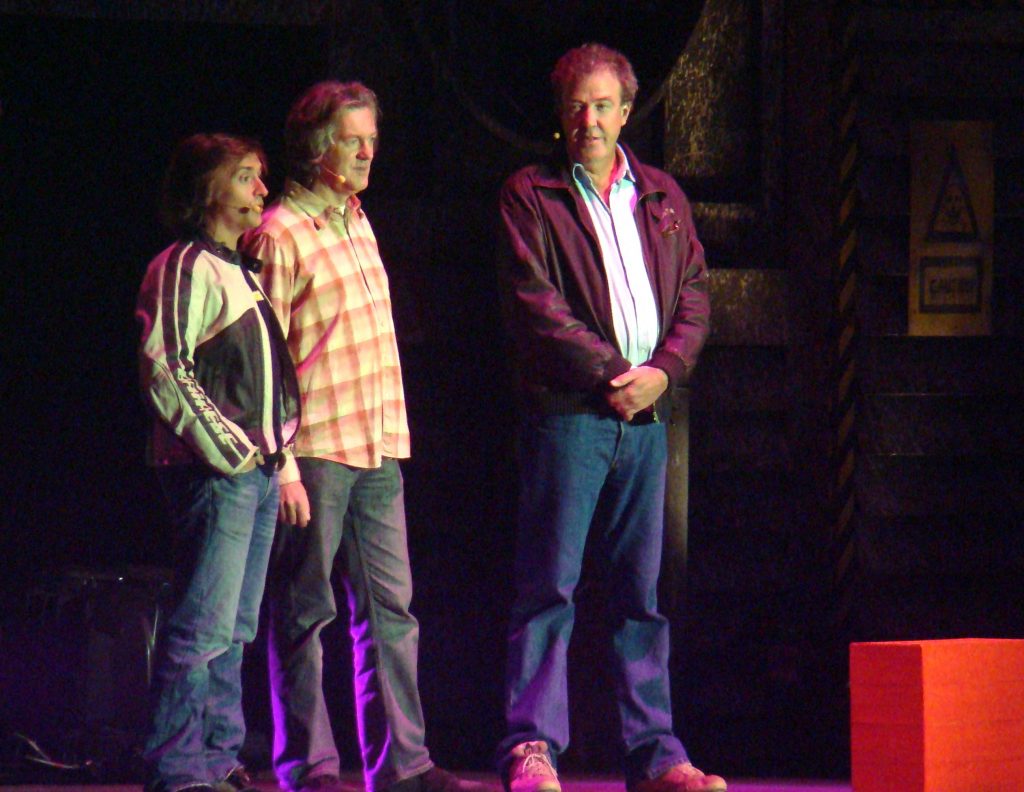
Anyway, today I saw – on Amazon, because we don’t need p2p anymore to watch our favorite shows – the last “live audience” episode of The Grand Tour, the followup of Top Gear for the 3 presenters (Jeremy Clarkson, James May and Richard Hammond) . And it impacted me more than I thought it would. And, while I didn’t cry, I wasn’t surprised to see Jeremy Clarkson tearing up.

Well, they will still continue to do crazy antics in special, longer shows, but for the moment, thanks for the memories!

Of course, Top Gear still continues – maybe – on BBC, with a different team, and the show is not bad at all. But, for the moment, I’m actually surprised how much I feel I’ll miss the crazy “original” trio.

Photo source

Make your Startup’s Investor Pitch Deck Better with These Resources

March 18, 2019 By Bobby Voicu

Great startups pitch deck presentations

If you’re ever in the position to raise money, the first thing you’ll probably do will be to look for examples of pitch decks to use with your potential investors. In 2012, when I was raising money in earnest for MavenHut, finding this kind of examples was difficult. I needed to access my own network (which was not that big) because there were almost no decks available online.

Actually, I think the one that helped me the most was Reid Hoffman’s Linkedin deck, which he published on his own website, along with explanation and context for each deck. It was gold for me, because it helped me understand a little bit more about investor perception and targets. You can still find the article here and I hope it will still be there a long time, because I learned more from it than most of other resources combined.

I wouldn’t have mentioned pitch decks and presentations if I didn’t find today, in Ben Evans’s newsletter (one of the best tech related newsletters online) a mention to an article with 30 pitch decks from some of the most successful startups in the world or, how they put it, legen…wait for it… dary startups. You have the likes of Airbnb, Square, Buffer, Mint, Mixpanel, Moz (of Lost and Founder fame). You can even find Buzzfeed or YouTube. A really good collection that you shouldn’t miss if you’re raising money or think of raising money.

Of course, I would be remiss if I didn’t mention MavenHut’s public presentation at the end of Startup Bootcamp in June 2012. While the deck is not available online, you can see me barely breathing with stress on stage. It might actually be funny, but I think it’s also educational.

Since we’re on The CEO Library and we’re all about books, here are the books that helped me when pitching and when learning how to pitch, maybe they will help you as well:

  • Pitch Anything – by Oren Klaff
  • Made to Stick – by Chip & Dan Heath

The CEO Library Story – Month #1

October 6, 2017 By Bobby Voicu

I talked about The CEO Library here. It’s a passion project I started about the books recommended by the people we look up to.

After 3 weeks, we have some numbers from the project. The reason I’m adding writing this post is to keep me and my team accountable and, frankly, I think it’s an interesting exercise and it could be a good resource for the future. In the last 2-3 years I was often sorry I didn’t write more about MavenHut’s evolution, so I’m doing this for The CEO Library.

Traffic: 4190 unique users
Email subscribers: 164 emails
Facebook likes: 405
Twitter followers: 120
Instagram followers: 70
Total shares through SUMO widget: 47
Interviews: 9
Collections: 3
Books added: 605

Genuinely, I didn’t expect 4000 users in the first 2 weeks. I announced the project on my newsletter, to about 250 people. I’m not a hypocrite, I expected someone to share something, but I expected spikes of about 150 people and about 10 per day after the first several days. I was wrong :)

Even more important, though, I didn’t expect the excitement around the project from people that found out about it: I got about 100 emails/messages/calls about how interesting the project is, how they found more books to read and how they understood more things from the interviews about the books they already read.

OK, what’s next?

Well, we’ve grown the team, actually. Starting in the first week of October, Vlad and Theo got involved, as well. They were building another project I was involved in that wasn’t going where we wanted, so we got together to build The CEO Library faster.

We need to add more books to the database. More and more interviews and collections rely on them and, even if it looks like it’s a lot, 600 books added already is not that much :)

We’re also adding more providers for the books. Besides Amazon US and Amazon UK, we’re adding Book Depository and, hopefully, Barnes and Noble (they rejected our affiliate account request).

This is for this month. If you want to know something specific in the future, let me know.

Monday Entrepreneurship and Business Links #1

September 11, 2017 By Bobby Voicu

You might know that I write a weekly newsletter on Fridays. Besides interesting articles that I found during the previous week, I also update on what I do, from time to time. So, if you’re not a subscriber yet, what are you waiting for? Go here and subscribe.

This being said, though, I will add the links in the content of the newsletter here, on the blog, as well, on Mondays (I send them on Friday to the subscribers).

Here’s the first Monday links – and the almost 50th newsletter. As to the structure, I comment on 2-3 links that I think you should read if that’s all you have time to read and I add more for the people that have a little bit more time.

Until then, though, here are some links to articles I read last week:

1. 50 Things You [Probably] Forgot To Design

A great list of things you should remember to design/structure when starting a new site. Or when you want to improve an existing one. I forget most of these things all the time, so it’s nice to have a reminder handy.

2. Pomplamoose 2014 Tour Profits (or Lack Thereof)

It’s the first time I’ve ever seen a revenues and expenses list from a mid-level band. Not the Aerosmiths and Rolling Stones, but the people that sing because they love it and they almost make a living out of it. It was interesting for me and, hopefully, interesting for you.

3. Cap tables, share structures, valuations, oh my! A case study of early-stage funding

A good primer on what everything means. I wish I found this when I started to raise money for MavenHut. I had to go to a friend and stay on his head for 4-5 hours to learn all this shit :)

Other links:

  • The Truth About Failure That Every Entrepreneur Should Know
  • GROWING CONVERTKIT TO $5,020 IN MONTHLY RECURRING REVENUE
  • How to Build a Million-Dollar Clothing Empire
  • 5 Reasons ‘Game of Thrones’ Fans Didn’t Respond to the HBO Hack

——–

The image on the top of the post is a monkey looking through the “window” at FOTA Wildlife Park in Cork. If you ever come to Ireland and find yourself close to Cork, don’t miss FOTA. You’ll thank me :)

Difficult Investor Questions for the Early Startup Founders

July 10, 2017 By Bobby Voicu

I’ve put together a list of question you should have the answers to by the time you meet your investors. You don’t need a PERFECT answer, but you need a logical and well thought one. Even if it’s wrong, at least it shows the investor you thought about it. The list is generated from my own experience talking to lots and lots of investors while raising money for MavenHut, as well as from people I’ve asked here on Linkedin and here on Facebook. Thanks, everyone, for your help.

Of course, the most difficult questions will be the ones you don’t know the answers to, as I say in this video. But you will get the answer and, the next time you hear the question, you will not be surprised anymore.

Here is the list, with the questions organized in some loosely similar categories:

Founders and team:

  • Why are you doing this?
  • Why are you the best person to solve this?
  • Are you sure your team is 100% with you on this?

Product:

  • How are you making money?
  • What are the main milestones you’ll get to with the money you take now?

Company:

  • What’s your valuation? Post money/pre money?
  • What’s your cap table? (post and pre money)
  • If you do have additional shareholders to the founders, why are they there?

Market:

  • What is your addressable/obtainable market?
  • What’s your route to market?
  • Can you scale whatever got you here?
  • How much of your market are you gonna get and in what timeline?

Plans:

  • What’s the first hire you’ll make? Why?
  • How do you become a billion dollar company?
  • How will you spend your money?
  • Do you have an 18 months (at least) business plan?
  • What would you do if you got the double amount of what you are fundraising?

Risks:

  • Is your intelectual property at risk of infringing other company’s IP?
  • What’s the biggest risk of your company and how are you prepared for it?
  • What if X (a big company in the space) clones/reverse-engineers your idea?
  • What will you do in 18-24 months from now, when the money would run out?
  • Since you don’t have your own numbers, where did you find the numbers for the industry? (just to be sure you didn’t really got them out of your ass)

The thing is, there are a lot more questions you should be able to answer, but the ones above are questions that confused me or other startup founders at the time.

Why don’t I try to give some standard answers? Well, I think that you’ll get better at understanding how to explain what your company does if you prepare the answers on your own. This way you will also be much more able to adapt if the questions you get aren’t exactly the ones you prepared for.

Here are some more questions, from other sources online:

65 questions venture capitalists will ask startups
Compendium of over 100 questions investors ask startups when pitching

———

Photo: MavenHut’s founder team, including me, on the stage for Startup Bootcamp Dublin Investor Day, 2012.

Effective or Efficient, Which One Are You?

June 2, 2017 By Bobby Voicu

Effective vs Efficient

A lot of people pride themselves on being efficient. And this is not bad. Unless you’re efficient about the wrong things. Which means you’re not being effective.

Take this: you have a business selling a hat. And you devise the most efficient marketing plan for selling the hat. But truth is, the hat is bad. SO BAD! And you just spent 3 months creating the best and smoothest marketing plan. And you don’t sell anything. Because people can see that your hat is bad.

Effective = successful in producing a desired or intended result.

Obviously, what you need to do is make a better hat and THEN create the best marketing plan. And, I know, sometimes it’s not that clear.

Basically, what you need to do is to become effective instead of efficient. You’re being effective once you move things forward, once you put your energy in the RIGHT things. Like improving your product. Or creating a great marketing plan ONCE you have the right product.

To sum up, effectiveness is the combination of good efficiency and good prioritizing.
It’s being efficient about the right things.
. Once you have these, all you need to do is put in the work.

Anytime you hear someone saying “I’m very efficient” ask “what about?”. Because you want effective people around you. Those that are efficient about the right things.

A recent example from my own history was when we tested if people wanted to play Solitaire Arena in a very efficient way – time and money wise.

The delusion of investor supported startups

May 12, 2017 By Bobby Voicu

I was reading a Reddit thread the other day. A guy was doing an AMA about his startup and had this to say about it:

As a result of this, we are now a pretty rare breed of business as we started with no finance, no VC Funding etc etc, we did it the hard way and are building it the ground up. We use our profits to grow and have no outside help.

Most of the businesses people build are not VC funded or started with huge financing. Most of the businesses are started with some savings and a lot of time put into growing it. I looked for some information on it and I found the infographic here, that gives you a better image of how people finance their own entrepreneurial endeavors.

I didn’t want to point fingers to this guy, though. He’s not the only one that thinks that most entrepreneurial initiatives are heavily funded by outside investors (especially semi-pro and professional investors, like angels and VCs). There are lots of people that think this (at least in the circles I move and read of). And I think we’re a little deluded. And I say “we’re” because I think I’m also heavily biased toward invested startups, as well. After all, MavenHut raised several rounds and this is how it got to be successful.

What’s wrong with the invested startup delusion?

It’s bad thinking that you can’t really start anything if you don’t have outside investment. That all you need is an idea and someone to put $50k-$100k-$500k-$1M in and you’re set, you’re gonna change the world. Because you should focus on doing something and improving your product. Instead, the wanna-be entrepreneur will waste time running after potential investors, “networking” the hell out of all the events in their immediate (and not so immediate) area and, in general, being annoying. Really, have you ever had a guy that never raised a dollar in his life explain to you how to raise money from VCs? Even if you’ve done this several times in the last years? It really gets on your nerves at some point.

Being annoying aside, even more important is that you deprive yourself of a lot of experiences that will generate the great ideas that will help you get a good company off the ground.

And I talk from my own experience: I started doing “business” online in 2005 with no savings or money whatsoever. I was lucky my sister allowed me to stay in a room in her apartment for a while, but that’s all I had going for me. I looked for work on what is now Upwork, this helped me understand SEO, that helped me understand WordPress, that started me on blogging, that led to a car blog that I wanted to monetize through a racing game that went nowhere. All this took about 6 years. By the beginning of 2012, I started a new project, a platform for 1 vs 1 single player games, with 2 guys that I worked with at the second version of the racing game I told you about. The project would later become Solitaire Arena and MavenHut. Without a doubt, the final result changed my life a lot for the better.

My entire online experience came from starting “something” online without any kind of financing. Yes, MavenHut was eventually financed by a VC and I’m happy for it. I still think starting an investor supported startup should be the natural evolution of your experience with entrepreneurship, not the start of it.

The next time you hear someone saying they just need a “small” investment and they’ll change the world, slap them across the head and send them to ask for investment from their close friends and family (the talked about FFF, the third being fools). If they can’t convince someone that knows them and should trust them, why do they lose time trying to convince someone they don’t know?

Finally, I know this won’t change, people will still dream about the VC fairy instead of just doing something with the resources they have. But if I get to convince at least 1 person to start anything, my job’s done ;)

Oh, and a plug for my Curated Reading List, where I often add articles about bootstrapped businesses. Subscribe and see for yourself.

P.S.: my sister got handsomely remunerated for the “investment” she’s put in more 10 years ago when she gave me and my cat the smallest room in her apartment. The cat didn’t care about rules, he got the entire apartment as hunting ground the next day. I didn’t :)

How I use Reddit and how to make the site useful for you

May 4, 2017 By Bobby Voicu

How to use reddit and make it an useful tool

During the last 6 months I found myself using Reddit more and more. I’ve had a Reddit account for the last 10 years or so, since the times of Digg, Delicious and StumbleUpon. The reason I didn’t really use it until recently, though, is that I thought the site was crowded with things I didn’t care to know, overrun by people that wanted cat pics (I love cats, I lose hours from time to time watching at photos, but still…).

Until, once, I remembered something a friend of mine wrote about: if you want to understand something, you have to actually use that thing in earnest. So I started reading about “How to use Reddit”. And here’s what I ended up with :)

What is Reddit?

A forum of forums, a community of communities. It’s a collection of information from every domain possible which gets upvoted and downvoted by the multiple millions of users there and, based on that, it gets presented to all the users/readers on their homepages. If you don’t personalize your homepage it becomes a collection of photos and politics. But if you DO personalize your homepage, it’s a great tool to know what your community’s interested in.

First thing: use Reddit Enhancement Suite. I don’t know everything it does, but I know that my experience is so much better than with the default Reddit look/options. It’s a browser plugin that works with most browsers. From now on, in this article, I assume you have RES installed.

Second: you can find a subreddit (a niche forum, if you want) on about any subject possible. So you have to decide what kind of information you want to have on your front page of Reddit. Because, yes, Reddit has highly personalized homepages for every user. You can, basically, subscribe to any subreddit to appear on your home page and, more important, you can remove any subreddit from your home page.

You go here, where you can see the subreddits you subscribed to. As of now, I’m subscribed to about 100 subreddits, mostly business and travel, but I am also subscribed to things like YouSHouldKnow, PS4Deals, PS4, which are things I’m interested in. I’ll put a list with all the subreddits I’m subscribed to at the end of this article.

For obvious reasons, if you are interested in business and startups, subscribe to /r/Startups and /r/Entrepreneur. Also, one of the best subreddits I’ve seen around is /r/JustStart. Targeted mostly to Amazon affiliates, it’s really good because it has ridealong case studies (people write what happens to their business almost every month and it is really, really interesting to read). Another similar one, for any type of entrepreneurial business, is /r/EntrepreneurRideAlong.

Also, if you want to find interesting subreddits, search in Reddit. Or, even better, you can search for “interesting subreddits in [niche]” on Google and you can find lists from people that are really interested in the same things.

This is how I find good content to read.

Participation in communities

Another thing you can get from Reddit, though, is participation in communities. If you are the person that likes to help others, but on your own time, not theirs, Reddit is the best place. I go, every 2-3 days, to /r/Entrepreneur and /r/Startups and look at the New section on each subreddit. That’s where you see the latest things people post. And I try to comment, helpfully, on those things (if I have something to say, obviously). The reason I go to New instead of Popular or Controversial is that, by the time I get to the posts in those sections, I really have nothing to add. Most of the comments are thoughtful, people are genuinely trying to help, so I’d just repeat what others said.

Of course, from time to time you might have something to add in form of a post. An interesting link, something you want to ask or share. As long as it’s interesting for the community, people will react well, thank you for it and share with others. Be careful, though, at self-promotion. And I don’t say this about things you share with the community (my post about quitting MavenHut was received well enough), but about links to your blog/website that don’t really add anything to the subreddit. Then you will be hit with a lot of downvotes that will kill your karma. And some sarcastic comments that you will not enjoy :)

What’s karma?

Well, it’s a kind of credits system. It shows how relevant what you say and publish is for the communities you are part of. I have about 200 karma at this moment (which is really low), but I’ve seen accounts with tens, if not hundreds of thousands of points. Truth is, each subreddit has a different chance of getting on the /all page (which is, basically, the page everyone sees by defaultif they didn’t personalize their homepage). Once you get there you will probably generate about 30-40,000 karma. So, if that’s your play, this is where you need to get to. Most of the things in the subreddits I follow don’t get to /all, so you don’t really get a lot of karma.

And talking about /all: until recently I didn’t look at the page at all. It was full of politics regarding US elections (both Trump and Clinton fans manipulated the algorithm to get their stories on the front page). Several months ago, though, Reddit gave users the opportunity to exclude subreddits from the /all page. And now it’s somewhere I go from time to time. I removed almost all politics, all conspiracy theories, almost all pics. It makes a much better page for me now :)

Finally, before showing you my subreddits, I have to tell you that it took me about 2 weeks to actually start to get what Reddit is about and about 3-4 months to actually start making an effort to contribute to the communities. I do this about 3-4 times a week, for about an hour (contributing, I mean). I also read Reddit almost every day, for about 30 minutes, to see if there’s something interesting to read available.

Here are the subreddits I’m subscribed to: (if you want the link, just put reddit.com in front of it, I’m not gonna add 100 links. I’ve bolded the reddits the I think are really, really interesting.

Keep in mind that these are things I find useful, but there are some aspirational things there, as well (like /r/LongTermTravel). A guy can dream, right? :)

A list of all the subreddits I’m subscribed to

/r/entrepreneur
/r/startups
/r/entrepreneurridealong
/r/JustStart

/r/travel
/r/books
/r/history
/r/longtext
/r/ireland
/r/lifehacks
/r/cruise
/r/webmarketing
/r/todayilearned
/r/smnallbusiness
/r/wanderlust
/r/TrueReddit
/r/emailmarketing
/r/lounge (I think you need to be buy gold for this – like a premium subscription)
/r/youshouldknow
/r/datasets
/r/digitalnomad
/r/analytics
/r/debtfree
/r/Cork
/r/depthhub
/r/solotravel
/r/printSF
/r/adventuregames
/r/lowcar
/r/ifyoulikelblank
/r/truegaming
/r/explainlikeimfive
/r/travelhacking
/r/buyitforlife
/r/mildlyinteresting
/r/irishtourism
/r/everymanshouldknow
/r/playstationplus
/r/travelprotips
/r/getdisciplined
/r/dotcom
/r/travelblogging
/r/OutOfTheLoop
/r/PS4Deals
/r/OffGridCabins
/r/growmybusiness
/r/longtermtravel
/r/TravelHacks
/r/CozyPlaces
/r/PPC_Analytics


What’s it like to start a company?

April 11, 2017 By Bobby Voicu

Last week I’ve talked to the entrepreneurs from the 2017 cohort of RebelBio, in Cork, Ireland. I’m hopeful I’ll be helping them overcome at least some of the ongoing issues you face as a startup founder. So I had a presentation that touched some of these points:

1. You’re not alone

You’ll often feel that you are alone and nobody understands you. While it may be true that most people don’t understand you, there are some that do: the people around you, that go through the same shit. People that just went through it are also a good source of help (I’ve started MavenHut 5 years ago, I still remember the feeling of waking up and not knowing what I should do next).

"I remember the bad parts. If you asked me to start a company now I'd go on a corner and cry" thanks 4 keeping it real @bobbyvoicu @RebelBio pic.twitter.com/6rpzFZB3Nj

— Emilia Díaz (@EmiliaDiazCL) April 7, 2017

2. Too much information, too many mentors

You don’t have to act on everything NOW. Just know that these mentors are available to help and know that what they say is something that you will need at some point. It’s a resource you can use at some point.

3. You will fight with your co-founders

This is not an issue. It’s an issue if you don’t sort it out and let it linger. All of you are together in this so find a way to sort out the issues when they appear.

4. Draw a co-founder agreement

Look, maybe the most important thing you have to do along with your cofounders is to align your expectations. Even if you don’t make it a document, make it an email that you all know. Things get forgotten in time (everybody kinda forgets things that they don’t really care about), so keep this as a reminder.

5. Define success

What is it that you want from this company? Money? How much? Reputation? What does it mean? Being in scientific journals? Appearing on the cover of Forbes? All of you need to understand what the others want so that you can align.

6. Define failure

When do you stop? While it’s anticlimactic to think about it, you should. It’s not a bad thing. If you say that you will stop if you don’t get enough funding (and define the amount clearly) in a year, you will have a lot of fire under your ass to make that thing happening.

7. What are your cofounders’ limits?

Each one of us has limits: being it family time, not being able to travel, financial issues (mortgage). Talk about them as early as possible.

8. How to use the accelerator (if you go through one)

– Meet with as many people as you can and pitch your business
– Ask them two questions: what should I do to improve my pitch & who do you know that you think would be interested in what I do?
– Create a monthly newsletter where you add (ask them before!!) all the potential investors and mentors that you talk to. Just to keep them updated, even if they are not interested in your company or domain. I’ve never heard of an investor saying “no, don’t send me information about your company”. We’ve done it pretty successfully at MavenHut.

That’s it for today :) A good, complementary reading might be the story of the first year of MavenHut.

By the way, I’m sending a weekly newsletter with great things to read (mostly business, but not only). You can subscribe here.

RebelBio mentoring in Cork, Ireland

April 9, 2017 By Bobby Voicu

For the next 3-4 months I’ll mostly be in Cork, Ireland, where I’m mentoring the teams for RebelBio, a BioTech accelerator that SOSV has created here about 4 years ago. SOSV is, as some of you may know, the investor in MavenHut and our partner there since 2012.

I will actually act as an “entrepreneur in residence”/”I understand what you’re going through” person here for the newly minted entrepreneurs, while I’m also trying to understand BioTech and what it means in terms of investment and entrepreneurship.

Of course, BioTech means life changing things, as well: solving humanity’s problems like cancer, food shortages, food poisoning, just to give you an idea of some of the things these teams are working on. The thing is, though, I will never be a scientist, but I can be an investor, a mentor, an adviser or, why not, at some point in time, a co-founder of a BioTech company. And I want to understand what it means. This is why I’m not necessarily focusing my attention on the science part. It’s highly unlikely I’ll be ever in a position to do something directly in this area :)

The teams are now in the pre-accelerator period (when they learn more about the business side of things), before going to the product creation side of things (R&D, lab time, basically). I’ll update you on what they as time goes by and I get a grip of what the hell they’re creating :D

So, for the next several months, I’ll also write about Cork a little bit. A small city compared to Bucharest and a completely different lifestyle for me. I mean, in 10 minutes I’m out of the city, while in Bucharest, some days, I’d still be trying to get out of the side street I’m coming from, trying to get to my destination. Actually, for the first time in the last 20 years, I will not have a car at hand (mine or somebody else’s). Which is really weird :)

Sun and rain in Cork City, Ireland

A post shared by Bobby Voicu (@bobbyvoicu) on Mar 18, 2017 at 6:42am PDT

Update: Because I was asked: Cristi is now managing MavenHut. I’m still part of the board of the company, but since I’m more and more interested in investing, I’ve cut my time operationally as much as possible.

  • « Go to Previous Page
  • Page 1
  • Page 2
  • Page 3
  • Page 4
  • Page 5
  • Page 6
  • Interim pages omitted …
  • Page 9
  • Go to Next Page »

Footer

About

I write about things that raise my curiosity. And I’m quite curious about all kinds of things.

For a full “About Me”, go here.

Posts

  • We just raised $1.6M for Mixed Reality games

Projects

  • MixRift
  • XR Gamer Digest
  • Sami the Westie

Copyright © 2026 · Privacy Policy · Disclaimer

We use cookies to enhance your experience. By clicking "Ok" or by continuing to use the site, you agree to this use of cookies and data.